Tag Archives: children

The Best Christmas Gift Ever

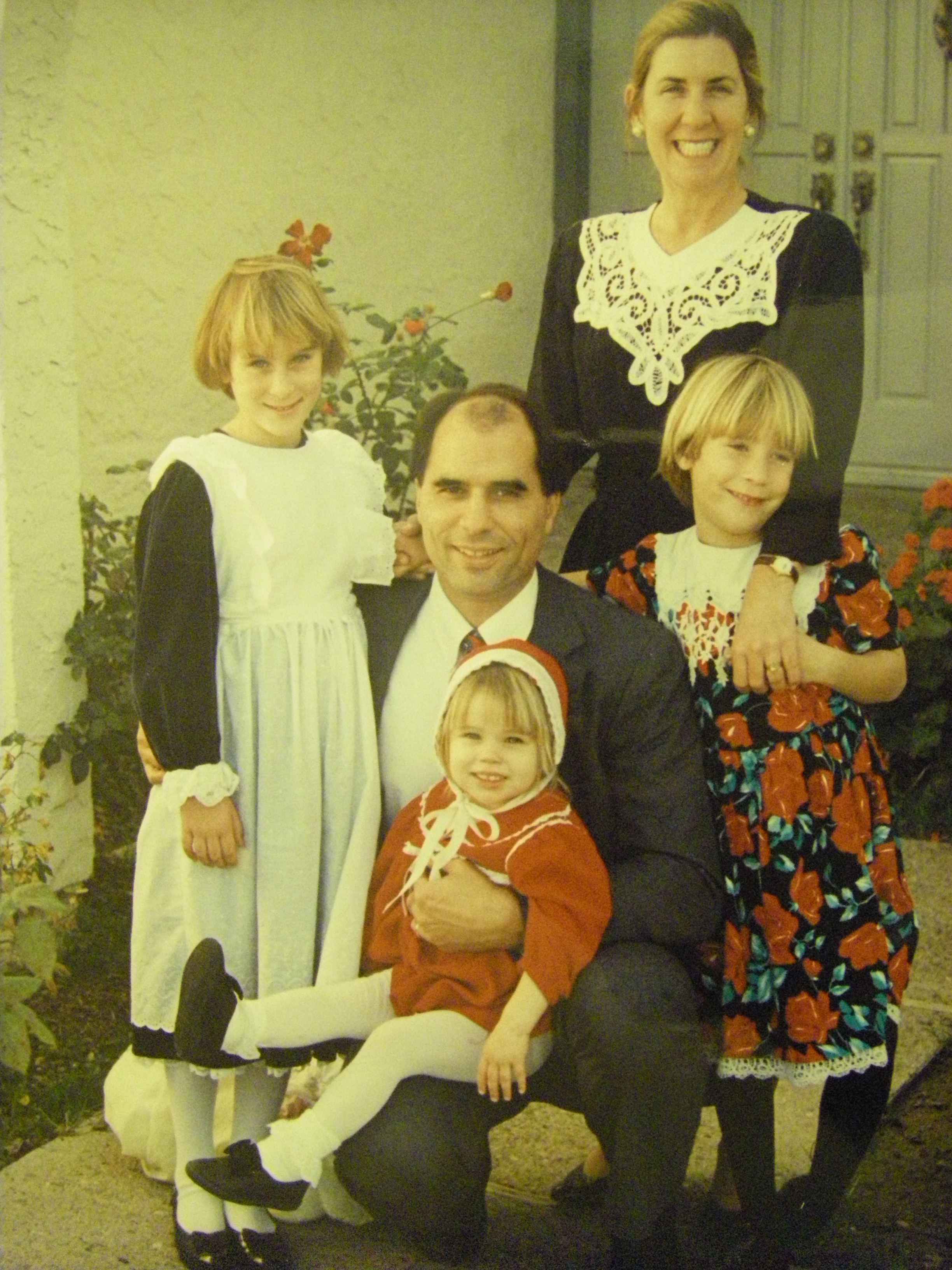
In fall of 1990, we moved to a fixer-upper in Indian Springs of the Monterey-Salinas area. Our list of projects was daunting–70s flocked wallpaper to remove, insulation to install, fences to mend, burnt-orange shag rug to pull, hardwood floors to lay down, and children to attend–of course–not in that particular order. We were still unpacking boxes when it came time to trim the Christmas tree and hang lights. Our children, ages five and two, were firm believers of Santa, so we tried our best to keep the magic going.

Sometime after Thanksgiving (not like now in September) and back when Sears and Target catalogs arrived in mailboxes everywhere, our littles were entertained for at least ten minutes, by pouring over the magazines and circling and numbering their wishes for Santa. Top of Meghan’s list was any play structure–any or all. The higher the ladder, the longer the swings, the more dare-devily the construction, the wackier the slides, the longer the monkey-bars, so much the better. That was all she wanted. She made this clear every visit to Santa and every day for days marching right up to Christmas. There was nothing else on her list.

The week before Christmas, Dale and I collapsed after completing semester grades for our high school classes. With no time to waste, we tackled family matters–top of the list was making Meghan’s play structure. However, a minor glitch happened when a northwest storm blew in dropping temperatures to well below freezing, as low as 23 degrees, and we now dealt with something more pressing, which was keeping pipes from bursting. Dale climbed into the crawl space and spent the first half of vacation insulating the ground-floor, as well as exterior pipes, to mitigate any potential problems. After all, we lived in California, not Maine or Alaska, and construction was just not the same. Our home was not built for temperatures like that.

Around December 23, Dale and I realized that Santa would be unable to fulfill Meghan’s only wish. So, I went to Costco. I braved long lines and dodged carts and fought other customers for what I figured would be the best alternative to a play structure. I bought a gorgeous Barbie, decked in a sparkly red ball gown, complete with high heels (what else) and bows of gold and silver in her glorious, wavy blonde hair. Breathtaking, really. Miss America almost. I wrapped Barbie in Christmas wrap, the special wrap designated from Santa, and wrote, under his guidance, that the play structure would come soon and Barbie could be Meghan’s playmate until then.

Christmas morning arrived with the expected high level of excitement. Our girls woke at some ungodly hour before dawn, and obeyed the established rule of opening their stockings before breakfast, saving the biggest and best presents for last. Everything in its own time. Stockings, next waffles, followed by, most importantly, parents’ coffee. Santa’s gifts arrived with anticipation!

Meghan, who could read few words, listened quietly as I read Santa’s note:

Dear Meghan,

You will get your swing set and ladder soon, I promise. I could not fit it all in my sled on this trip. In the meantime, Barbie needs a playmate.

Merry Christmas.

Love,

Santa.

Nothing is more devastating to a parent than to watch your child’s dreams dashed. Meghan didn’t say much. Her tears spoke volumes.

Actually, I do remember she said, “Why would Santa give me this?” in between sniffles.

Allie, on the other hand, took one look at Barbie and it was a match made in heaven.

“She’s so pretty” is what she gasped.

Meghan passed off Barbie and Allie could not believe the best dream she never dreamed was complete. That same afternoon, Dale and Meghan visited 84 Lumber, which happened to be open on Christmas Day. They brought home cement, wood, frames, and of course, a slide. The play structure was completed within a week.

Now, thirty-some years later, Dale’s carpentry skills are still at work. This week, Dale and Meghan set the posts, the beginnings of a play structure for our grandkids–Emmy and Theo. Emmy learned how to use the drill. Theo toddled around holding a screwdriver, sticking it into new drilled holes. Neither grandchild understands what the construction is going to be, but perhaps in this pandemic year, it will be something wonderful indeed.
Year 18 and Counting

I began this project a few years ago during our 35th year of marriage. It was supposed to be a Valentine’s gift to my husband. The plan was one special remembrance for each year. I sailed through years 1 to 17. Whether years 18 on were more difficult to write about or whether recent years—parents’ deaths, new grandbabies, retirement, and a move—something interrupted my writing. I am attempting this project again. Now we’ve made it 37 years, but like ocean tides going in and out, we hit high seas around year 20.

On the cusp of year 2000, some highly educated people in our neighborhood were freaking out over the change to the new millennium. These were doctors, who said that technology would be thrown into a tizzy with the change from 1999 to 2000. That everything linked to your name, identification, including bank accounts would crash. Some of these families began to stockpile, as though planning for the end of the world, like a harbinger of the Apocalypse. Really. Our neighborhood Bible study consisted of an M.D., a Ph.D., and everyone else had a B.A. or B.S. (so educated beyond high school), primarily Protestant, some evangelical. I bristled at many discussions, biting my tongue as conservatives railed against those who weren’t like them. Oh. My. Word. It was a difficult time for me—trying to appease the lions. I questioned who these people are, as the women (mostly stay-at-home moms) questioned me for working. The men generally stayed silent on this topic.

L.D.—I don’t know how you do it. I’m so glad my husband makes enough so I can stay home. It must be really hard for you.

Me—

S.M.—Yeah, I can’t see working and turning my kids over to somebody else.

Me—Sigh.

Ironically, I ended up teaching their kids in my biology classes. Dale and I drifted apart from these people, perhaps subconsciously adhering to a moral or religious divide. Maybe it was our kids moving on to different schools, or our switching jobs, but we didn’t socialize with them as much, except for the occasional wave as we drove up the street.

Instead our lives became entrenched in kid activities. Daughter M. was a 15-year-old sophomore, Daughter A. 12, and Daughter S. 9. M. competed in volleyball, swimming, and water polo, and A. played volleyball and basketball, and S. pursued theatre and horseback riding, and everyone did 4H.  Our new friends became parents of other teammates.  Daughter M. qualified for Far Westerns and other big events, often held at a swim complex in the Bay Area. Weekends began at 5 am, a two-hour drive with a McDonald’s breakfast on the way.  We loaded the car the night before with tent, sleeping bags, pillows, piles of towels (one per event, plus one per each warm-up), team parkas, hats, gloves, boots, nothing less even in summer. The difficulty was staying warm between events. During one swim meet in Walnut Creek, snow blanketed the hills and ice coated the deck. Hazard cones designated slippery spots, so swimmers accepted the challenge of a new sport—ice skating, while parents sat bundled in cars or by heaters under tarps.

To make a meet go faster, parents timed, judged, or scored, which meant donuts, lots and lots of them and all day long. Eating that Crispy Cream or maple bar with extra drizzle was optional, but few parents passed them up. Swimmers maintained their lean, sculpted physiques, while parents not so much. You could equate the better swimmers with their more portly parents, those who spent more time sitting at swim meets.  Dale and I trained as stroke coaches for U.S. Swim, where we walked the pool deck (trying to get some exercise), watching each stroke and turn by poor, exhausted little kids. The occasional swimmer who couldn’t pass muster (per U.S. Swim rules) tormented me as I much as I did him or her with that white DQ (disqualification) slip or “traffic ticket” (my phrase in an effort to minimize the damage).

Volleyball tournaments were a welcome change from the freezing cold of winter swim meets and scorching heat of summer swim meets. These tournaments were played inside a gym, where parents didn’t need to time, judge, or score, and the action lasted an hour, sometimes longer if the games were close, making the drive reasonable; whereas, some swim events finished under a minute. Daughter M. swam a 50 free in 26 seconds—and we drove two hours for that event—and then two hours home. But, hey, these were our kids and we were doing the parent thing. Dale and I traded weekends with daughters, but I usually attended swim meets since swimming was in my veins and background, while Dale, a former volleyball coach, became the volleyball parent. Through it all, we accumulated points at Residence Inns or Best Westerns, hotels of choice for traveling athletes because breakfast was included—that yellow blob of scrambled egg, on demand waffles, some sort of sausage or micro waved bacon and coffee of the blandest kind in the world.

When our youngest Daughter S. chose to compete in gymnastics, we were prepared to work the sidelines, whether it was bringing food & drinks, scoring, timing, or judging. We knew the “drill”—early weekend hours and two-hour (minimum) drives with sleeping athletes. We knew the costs of sports. What a welcome surprise for us at the first gymnastics competition—parents were banished to the stands, not permitted anywhere near the floor. Wootwoot! I read many books during gymnastics tournaments; looking up in time to watch the floor exercise or vault or whatever S. was doing. I even came to recognize which level competed by the music, synthesized variations of “tinny” sounding themes.  We came to enjoy, even relish, sports weekends, and then as all good things come to an end—our youngest daughter graduated, and so did we.

35 Years of Marriage–Year 17

This collection of stories is an anniversary gift to my husband of 35 years–one story for each year. Our 17th year was one of significant change. For nearly two decades, we both taught science at the same high school which we loved, and this was the year we changed districts, schools, and subjects.

After closure of Fort Ord, Seaside and Marina became ghost towns, and after years of signing transfer sheets for students who were moving, and years of dwindling course selections offered at our high school, and most importantly, years of declining income while our family expenses climbed, we made a decision. Eighteen years we taught at Seaside High, at a school, faculty and staff we loved, but we needed to move.

1999 was our last year teaching at Seaside. Whenever we mentioned we taught at Seaside, the usual reaction was,

“Oh my god, aren’t you scared of getting shot?”

“Aren’t you afraid of working there?”

“Wow, you’re brave.”

Public impression was we risked our lives to go to work. It was never like that. Students were sweet and respectful, and we figured we’d retire from that district.

Seaside students came from all over the world, sons and daughters of military personnel stationed on the Fort Ord Base. Seaside High (chanted in a deep voice with emphasis on “side,” as in “see-SIDE”) pooled together a fascinating combination of genes–Samoan/African-American, African-American/Asian, etc.  During the 1980s (heck, even now), the government expected teachers to count ethnicities within our classes. Seriously? Seriously. Of course, data recorded on scantrons, determined federal funds the school received, so we took this assignment seriously.

1999 was our first year teaching at Salinas High, John Steinbeck’s alma mater, and different from Seaside in many ways. 2600 kids attended, nearly 1000 more than at Seaside. Salinas lacked the diversity of Seaside; it seemed as if only two groups attended–farmers’ kids or farm-workers’ kids. Think of pre-packaged lettuce to chase the money. The “show-case school” of the district possessed beautiful architecture and strong history in town. Football games were the biggest (usually only) thing on Friday nights; parents and grandparents, mostly alums of Salinas or neighboring Catholic schools filled the stadium. Lots of “intermarriages” between Salinas High and Palma/Notre Dame alums, which made for exciting and packed volleyball, basketball, and football games.

That year, there was no welcome for new staff, rather colleagues demanded to know your stand on school issues, your stand with admin, etc. We left a school we cherished and moved into a scorching hot bed of politics, faculty taking pride in the rapid turn-over of administrators. I walked a thin line that school year–really three years until I had tenure. To say it was difficult to find friends on staff is an understatement, but we “first-year teachers” found solace in each other. And though I had taught 24 years, it felt like my first. I mourned the loss of our other school, eventually “found my way,” and celebrated that I worked at the same school of our oldest. Not just the same school, as a result of shuffling in the master schedule, daughter M. “landed” in my biology class.

Many in her class recognized me as the “science specialist” from their past elementary school.

“Hey, I remember you. You came to our class and we dissected owl pellets.”

Of course, that was then, ungraded and fun, this was now, graded and work. On the other hand, the class embraced the schedule change and me, which made the changes (districts, schools, subjects, and classes) worth it. Except for poor M.

I explained to my second period class. “M. is my daughter. She won’t call me Mrs. Harrison. She can call me Mom. If you call me that too, it’s okay.”

The class laughed and nodded agreement. Made perfect sense, still daughter M. avoided addressing me for that entire year.

35 Years of Marriage–Year 16 (Year of the Sheep)

I began this series as an anniversary gift to my husband, Dale. I didn’t make the postings in time for that anniversary, our 30th, as life interrupted my plans. But, we are still married and Valentine’s Day is approaching, so I continue.

If 1998 was our Year of the Pig, 1999 was our Year of the Sheep. And surgeries, several of them. February, 1999, our 4H girls decided sheep might be easier to raise, so we acquired two sheep–one for Meghan, one for Allie. Farmers and ag-people must be ROFL at this point. Sheep easier? What a bunch of city slickers. Yes, we were/are.

We learned about care, feeding, grooming, shearing, and I used my sewing skills for their skin-tight leotards. Who knew sheep needed a covering? Apparently, that wool keeps them warm at night, and where we lived they needed it. Who knew you use Woolite to wash a sheep? Yes, yes, you do. So many things I learned, and I studied biology in college–albeit not ag bio. There is a huge difference. My experience with organisms were 1) they were mostly dead and preserved or 2) they were of the microscopic variety, and on occasion, we experimented on each other in labs, e.g. human physiology tests on heart rate, etc. Never pigs or sheep.

While the sheep were fattening for the fair, I learned about nursing. Two days before school let out, Allie broke her leg, which required surgery and pinning. Poor thing, she occupied our couch for the first week of June, and literally got a “boot” in time for the next patient, Meghan, who had a scheduled orthognathic surgery, and a wired mouth for six weeks. Finally, Dale’s knee surgery, then he had the couch. Sam and I nursed the family and cared for the sheep (since their “farmers” were incapacitated) all June. By July, I needed a mental health break.

The stress of surgeries was slightly less than the stress of switching school districts, the latter offset by pay increases. I was shy one unit of graduate level physical sciences for my new position, and I found the perfect solution–a family road trip to Yellowstone, where I could take a University of Montana research level class in geysers, mud pots, and hot springs. We looked like a family who’d been in a car accident–Dale and Allie hobbling around, Meghan with her mouth wired shut, but what a trip we had. Visited Uncle Steve in Nevada and Uncle Carl in Idaho, camped in glorious Yellowstone, stayed with Aunt Claudie in Washington. Best part? No shortage of volunteer neighbors (parents and kids) who wanted to care for the sheep while we were out-of-town.


35 Years of Marriage–Year 15

1998 was the Year of the Pig, at least in our family.  In the Chinese calendar, it was the Year of the Tiger, but that summer we raised Rufus, a spring pig in 4H, and Meghan aged 13, Allie 10, Sam 7, and me and Dale middle-aged and feeling it.

After school and for several weekends, Dale and Meghan dug trenches and poured cement for a pig pen–one that a 250+ pound pig could not escape. We were city slickers, suburbanites really, and understood cats and dogs, hamsters and parakeets. With a dismal knowledge of livestock, we relied on 4H leaders to teach us what we needed to know, basically everything. As the saying goes, “When in the rurals, do as the rurals do.” We lived on the edge of suburbia, surrounded by farmland. We could do this.

Rufus arrived straight from his birthplace, a few miles down the road at a respectable 70 pounds. He needed to gain another 160+ pounds before the Monterey County State Fair. So, began our foray into farming, which meant extra work for me and Dale, as we oversaw twice daily feedings, stall cleanings, and pig walks, drove to feed stores for hay and feed, carted water to the trough, and drove kids to weekly 4H meetings.

Pigs are smart; they bark like dogs, chase paper flying in the wind, sprint when a gate swings open. Within minutes of “rooting” in his new pen, Rufus found the waterer, a large PVC pipe with a mammary gland-like metal tube. Knowing where to find water proves pigs’ intelligence, and Rufus was brilliant. He figured out how to shower by leaning his butt against the nozzle and make a sloppy pool of mud to wallow in. Five gallons of water emptied quickly, so Dale and I replenished the supply hourly. Good thing we were on summer break.

I cried during Rufus’s “weigh-in” at the fair, anticipating the loss of my swine companion, while Meghan calculated her potential earnings from his 265 pounds at auction. I think she looked forward to sleeping in past 6 am. Rufus won his weight-class, Meghan and Rufus performed well in showmanship, and I held it together until Sunday night when the fair ended. It took me  a year to recover emotionally.

31 Years of Memories–Year13

Changes Ahead

12/28/93 – 12/28-94

While our kids, Meghan, Allie, and Sam were little 10, 7, and 4, I worked half-time, Dale worked time and a half, his summers spent in construction as a tradesman-carpenter in electrical, plumbing, and carpentry on assorted remodels or new homes. Each Christmas, I consulted Alan Douglas, Dale’s friend and employer, for tool suggestions. Alan directed me to the right store, exact machines and best prices, so for these years, Dale acquired new skills and skill saws or saws-all or jig-saws or drills or whatever a good tradesman needed. Little did we know at that time how these skills and skill saws would be used, but that is a story yet to come.

For one brief blip during my teaching career, I shared a fourth grade position with Jan Nutton. Jan taught Monday and Tuesday and I Thursday and Friday, while we shared Wednesday.  It was quite an adjustment moving from high school to elementary, despite the fact that La Mesa was a science magnet school with field trips nearly every week. I delighted in teaching a variety of subjects and considered staying at fourth grade when the year ended.

Fourth grade children usually enjoy school, unlike teenagers, and they offer their teachers cards of devotion on random occasions or hug their teachers at moments of celebration or sorrow or boredom or giddiness. Not much triggers a hug, and initially, I struggled with the steady barrage of embraces, as this was so foreign from high school student behavior. I stood tall and immobile as one child after another lunged at me “hello,” “goodbye,” “good lunch,” or “nice break. ” Okay, that was weird—students marched in line –but not without the requisite contact. By high school, there is no marching except for ROTC, and hugs morph into high fives or slaps on the back or fleeting eye contacts, the latter the more typical. Elementary students gave wings to my heart every day. They tugged on my shirt, sweater, and sleeves. They hovered around my desk. They gave glittery, flowery cards, both girls and boys, cards unlike anything my husband has bestowed upon me, and he has given me plenty of cards. I received apples, oranges, pears and roses—for no reason. Dale is romantic, in a practical sense; his roses were the potted kind we added to our garden.

This year, we rushed to school or to day-care or to soccer practice or to swim practice (both of us), or wallowed in dirty laundry or clean clothes (mostly me), kept up with shopping and meals for five (me), maintained working vehicles (Dale), maintained plumbing or wiring or flooring or whatever the house needed (Dale),  kept up with yard work (both of us),  brushed and backwashed the pool (mostly me), bought clothes for growing children (always me)—all of which took hours of our days and weeks and weekends.

The dilemma of fourth grade verses high school hovered over my head for weeks, until I finally decided that high school anything was more stimulating than fourth grade curriculum; I returned to the high school campus and down the hall from Dale.  It was a difficult decision—a melancholy for the sweetness of young children and their precious gifts for the mania of high school adolescents and their exuberance for life.

31 Years of Memories–Year 10

10 Years a Family

10 Years a Family

Year 10 from 12/28/1990 to 12/28/1991
Ski Trip Extraordinaire

When I started this series of postings, I limited myself to the best events each year. That was my goal. I could write a realistic blog, which includes tragedies and mishaps, instead I deliberately chose to focus on uplifting, positive moments. That said it is important to preface some posts with sad facts that preceded events. For example, I miscarried twice before the birth of Allie. Therefore, when Allie finally arrived, we celebrated even more because we understood how fragile life and pregnancies were. I miscarried again following Allie. The doctor suggested this unusual loss at nearly 20 weeks was likely a cord problem, so I was reticent about another baby. I decided the best attitude was “Que sera sera” or “Whatever will be will be.” I remember our discussion on our ninth anniversary at the Carmel Mission Inn about trying once more. Dale was nearing 40 and I was 37. Our little “Que Sera” came nine months later and with an attitude to match.
A drive to work on a January morning, my radio tuned to the local 60s & 70s station, I half-listened to the D.J. pitch the station’s latest contest for three nights at Squaw Valley Resort. “The lodge front doors just steps to the ski lift, the 5 star restaurant atop the mountain, Olympic Village ski runs for Olympians through beginners,” he rambled on. I was on “autopilot,” ready to sing along boisterously, no passenger to correct my sharp notes or to complain about my interpretation of songs from my youth. The morning whizzed by and I headed home around noon, ready to begin my alternate life as supermom. As I drove up the hill, the afternoon D.J. said, “We will take the 7th caller for our contest. Call now and you could win three nights at Squaw Valley Resort.” I screeched into the driveway, sprinted into the house, ignored my kids and their Nana, grabbed the phone and dialed.
I never do this. I never enter contests. I never win. If I buy lottery tickets, it is once a decade. If I go to Las Vegas or Reno, I go to the shows. I do not throw coins in the machines or on the tables. I am not a gambler. But, on this one day in my lifetime, I was.
And I was the seventh caller.
The man on the other line asked, “How many steps from the lodge to the ski lift?”
Me—“37, 37, 37”—screaming, shaking, leaping up and down, and nearly crying–I knew this answer.
The man—“Are you sure?”
Me—“Yes, yes, yes! I know this! I heard it on the morning show,” I yelled into the phone. Nana and the kids stared at me as though I lost my mind.
The man—“Okay, congratulations, you just won three nights for a family of four to stay at the Squaw Valley Resort. Stay on the line for more details.” I heard the background noise of the radio as he put on the next set. He returned with the direct line to the resort and the reservation redemption code. Apparently, many other stations were offering the same package. It was a drought year and rocks were showing on the main slopes.
I called immediately to make reservations for spring break in March. The reservation clerk of Squaw suggested I save the trip until the following fall or winter, as there might be better skiing.
Clerk—“You won’t be able to ski in March,” he explained. “We expect to close the resort in a week, unless we get more storms. It doesn’t look promising.”
Me—“No, I need to go this spring, not next fall, because I am pregnant. I have two kids now, but I will have three kids next fall. It will be simpler in March.” I could not convince the guy it was easier being pregnant with two kids than having three little ones.
So, I made our reservations for a trip seeing wildflowers and hiking in the woods instead of skiing on Olympic runs. Then, the rains began and did not stop the entire month of February. In fact, January to February went from being one of the driest on record to the wettest in a month. Salinas had two 100-year floods in a row within a span of weeks. The snow pack exceeded 50 feet, nearing Donner Peak record levels, and the resort stayed open until mid-July. We skied fresh powder and walked all of 37 feet to the ski lift every day.

31 Years of Memories–Year 8

Year 8 from 12/28/1989 to 12/28/1989—How We Got Our House
We camped during June and July, including visits to family in Southern California. When we returned, loads and loads of dirty laundry and piles and piles of filthy camp ware waited. In morning, the kids woke wanting pancakes for breakfast and lemonade with brownies for lunch. Perfectly sensible. Totally sugar. Definitely summer. I made breakfast, washed camp dishes, and sorted laundry. Meghan showed renewed interest in toys not seen for weeks and now scattered over the floor. The boys next door, Chris, Michael, and Douglas, appeared at the front door, wanting Meghan and our contribution to the neighborhood lemonade stand. They used Meghan’s Playschool kitchen, with a sign hanging from the plastic range advertising “Lemonade 20 cents,” and then ran up and down the street shouting the opening of their new business.
Meanwhile, Allie’s naptime at 11:00 was disrupted because of being home. Her summer naps often occurred in the car seat when we moved from one campsite to the next. Now, sleep in her crib was foreign—on a mattress in a quiet room. I asked my neighbor to watch the kids (fair exchange—paper cups and lemonade for ½ hour babysitting) as I put Allie in the car for a quick drive to help her fall asleep. Sure enough, a mile down the road, Allie’s eyes began to flutter and she assumed her sleeping position—car seat mode. I had a few minutes left on the clock, so I drove to where the sun was shining.
Indian Springs always held an attraction for Dale and me. Most of the time, the valley sucked in the fog like a giant vacuum. In summer, a dark line of dense clouds and mist hung over the entire valley floor. The plants loved this; we did not. I drove around the Indian Springs neighborhood, dreaming and looking at houses. Few homes were for sale this year—not a buyer’s market for sure. Whether it was the woman pulling weeds or the “For Sale by Owner” sign that caught my eye, I stopped in the driveway.

“May I see your house?” I assumed this was her place, not a neighbor’s she was weeding.

“Yes, of course, come in.” Didi, widowed a year before, had moved to her daughter’s home in town, returned periodically to check on the place. I knew as soon as I walked to the front door that this was our new home. The overgrown weeds, the unpruned roses, the sprawling mint, the gravel lawn (which I hate)—were cosmetic yard work which I love. The front doors opened to a magnificent valley view, the living room to a view of the oak forest. The layout of the house, despite the ugly orange and brown shag rug, was open and flowing. We needed to remove the layers of unsightly wallpaper, rip up the repulsive carpet, replace the broken tile, but the house would work. Most significantly, the pool desperately called for a fence, but the place was doable.
I asked the owner, Didi, “Can you take a contingency?”
She smiled and said, “Where do you live?”
I described our place and named the street, to which she replied, “Oh, I know that house. My daughter lives around the corner from you. May I see your home?”
“Sure, of course,” and by now I needed to get back anyway.
Didi followed me home to the disaster I left. Paper cups flew beyond our yard, to our neighbors on both sides and down the street. Breakfast dishes covered the counter and table. Laundry and camping gear, still not put away, surrounded the couch and the floor. Meghan’s toys, along with Chris’s, Michael’s, and Douglas’s multiplied in my absence, making one of the messier days I left. Didi and I sidestepped the debris, carefully dodging Legos, Lincoln Logs, and assorted body parts of Mr. and Mrs. Potato Head.
“This is the same model as my daughters,” she chuckled, “I’ll take it.”
“Excuse me?” Not sure if I heard this correctly. “Did you say you’ll take it?”
“Yes, we can work this out.” Didi smiled sweetly and suggested I name the price for her home. I made an offer, knowing this was far below what her list price was, and she said, “Yes, that will work fine.”
I called Dale, who was working at his summer “fun” job of crashing computer programs for Digital Research. “Hi, Honey. I sold our house and bought a new one.” Of course, I gave a few more details. “Okay, great, I’ll stop by the library for the forms.” I realized afterwards that Dale did not question me, that he agreed to it sight unseen.
Two days later, we contacted the title insurance company and escrow began. On the third day, Dale dug trenches around the pool for a fence; I enrolled Meghan in Spreckels kindergarten class. The next two weeks we packed. We paid a team of our high school football players $20 per hour plus pizza to move Didi and us. Poor guys had to move furniture to and from both houses, but they loved earning money and eating food. Boxes lined our hallways from floor to ceiling. We did it—in two weeks, with library reference books and without realtors. The title insurance company representative told us he never, in his thirty years in the business, encountered such an efficient escrow.
The bus picked up Meghan at her new house on the first day of school. We were home.

31 Years of Memories–Year 7

Year Seven from 12/28/1988 to 12/28/1989

The Year of the Quake
Baseball fans and Northern Californians know well this date, October 17, 1989. At exactly 5:04 p.m., the earth shook for 20 seconds to a magnitude of 6.9, delaying the Oakland As and S.F. Giants World Series game, destroying sections of bridges, toppling houses, devastating lives. The earthquake reached the Monterey-Salinas area as well. We felt it. We lived through it. Here is our story.
That day, my physical science classes made ice cream, gallons and gallons of it, as part of the thermodynamics unit, while Nana Eva watched our girls. We made a variety of flavors from super rich vanilla, rivaling Häagen Daz, to cookies and cream diet version and everything between. High school students possess creative imaginations and mammoth appetites. We used over a dozen ice cream makers, hand crank of course, and by the end of the day, the metal tubs of ice cream firmed in the science and home economics freezers. Dale taught his usual schedule of biology, and then he rushed to the gym for a volleyball game against Salinas High.
At 4:00 p.m., I took Allie to her 1 ½ year old checkup, which included a multitude of shots. We left the doctors’ office, returned to the high school to watch the play against the number one girls’ seed. Meghan, meanwhile, frolicked beneath the wooden bleachers as Dale called plays from the sidelines, and I watched the game with Allie. Just as the team’s leading server threw up the ball, the quake struck. I saw the waves travel through the floorboards, across the gym floor, not sure, at first what I was really seeing. The lights went out. People dashed down the bleachers. I ran out the door carrying Allie and calling for Meghan. At least Meghan was inside with her daddy.
Swimmers, dripping from their workout, described huge waves while the pool lost a foot of water. The football team sprinted back from practice; many said the shaker knocked them off their feet. All of the sports fields, in fact, the entire school were built on sand dunes, trembled. Since this happened before cell phones, we heard about the epicenter, the magnitude, the disaster by car radio. Every few minutes another aftershock occurred and the school cleared out quickly. With the power out, I thought to rescue some ice cream out of the gallons and gallons we churned, so I ran to my classroom and grabbed what I could. That evening, we celebrated our neighbor’s birthday by candlelight and consumed copious amounts of ice cream.
Around 10 p.m., our sweet Allie was crying and miserable. Highly unusual for her, when it dawned on me, I never gave her any Tylenol after her shots as the doctor suggested. Poor little thing, she eventually fell asleep. I got into bed around 11 p.m., with the second floor of our house shaking like a cheap vibrating bed. So unnerving when you are trying to sleep. My eyes would drift and my thoughts float away, nearing sleep, when more quakes of varying intensities and durations rattled the house and me. One problem is you could never tell if a quake would subside or increase. I was ready to sleep in the car. The car might drop into an abyss, but nothing would fall on me. Dale’s solution, “Hey, if we are rolling around, let me rock your world.” What a man.
I am sure there were other significant events that year, but none shook my world as much as the earthquake in 1989 or none that I recall with as much vivid detail.

31 Years of Memories–Year 6

Year Six from 12/28/87 to 12/28/1988

We Expand Our Family

We were masterful parents with one child, we could do two; besides, among our closest friends, it was oft discussed that you were not a “real parent” until you had more than one. As in, “Pfft. What do they know?” we scoffed as we observed other “starter” parents. Parenting doesn’t count until you have deal with sibling rivalry, sibling fighting, etc.–the whole Cain and Abel stuff.  Allie arrived April 12, 1988 after a year of extreme highs and lows—the birth of Allie followed my miscarriage of twins. We purchased a Volvo station wagon after a car accident totaled the Honda Accord. In school, my earth science students who had written to astronauts, received personal letters in response to theirs, and many letters arrived on the days following the Challenger explosion. Dale won the Sigma Chi Teacher of the Year Award for biology, I won Jaycee Teacher of the Year and Sierra Club Teacher of the Year award for environmental science, but we had difficult working conditions as he coached volleyball and worked extra jobs in computer science to make ends meet and no pay raise for us in the near future.
Allie was an easy baby. We knew this driving home from the hospital. She slept in the car seat, both of us half-expecting wailing since that was Meghan’s M.O. I remember Dale saying, “Hey, let’s drive somewhere, anywhere—she’s asleep!” So amazed were we. That year we attempted more family trips, but my personal favorite was a ski trip to Bear Valley. By then, Allie was 8 months and a tranquil traveler, unlike Meghan who screamed, “Stop, here, okay?” at every “golden arches” she saw along the road, and there are lots of McDonald’s on the way to anywhere obese.
Again, our mantra was to maintain an active life-style, in spite of now two children. Cross-country skiing was the ideal solution to family time and exercise for Mom and Dad. We bundled up our girls, in layers and layers of long underwear, sweaters, snowsuits, mittens, snow goggles, and hats, ready for a perfect snow day. The ski shop fitted our four-year old, Meghan with the exact size of skis, no poles necessary and best of all, the fjellpulken or Swedish towing sled for Allie. Inside the sled, a tiny seat sat suspended by coiled springs, in front, a windshield for protection from wind and snow. The fjellpulken attached to the waist of the “towing” parent by means of a tow bar, which stopped the sled and kept it from careening into the parent. We tucked our bundled up bundle of Allie and headed for the cross-country ski trails. Allie latched onto the edge of the windshield like a piece of Velcro—not certain what new adventure was in store. We securely strapped her in, placed additional blankets around her, along with lunch and snacks for four, frozen water bottles, diapers, diaper changing pad, wipes, toys, first aid kit, extra pacifiers, bottles, dry baby clothes, everything responsible parents bring for a simple outing.
Freshly groomed trails through the pristine pines began a few feet from the lodge, but far from the bathroom, Meghan’s first stop, of course. After undressing, “potty-ing”, and dressing, we eventually got going. Allie’s mittened fingers still firmly affixed to the windshield and her pacifier in place, we began. One smooth stride on the skis gently rocked her seat back and forth, Allie’s firm grasp loosened. Another stride, another gentle sway, one hand dropped away. By the third complete motion by the towing parent, Allie’s hands released the windshield, her eyes closed, her breathing deepened, like every time we put in a car seat. Moreover, Meghan, our rabbit, found every bunny hill on and off the groomed trail. It was a perfect snow day.